
It’s a Tuesday, about 2:30 PM. I was trying to migrate a .NET MVC to a CQRS model at the company I was at the time when I hear the generic ping from my personal email.

I alt-tab. It’s from a recruiter at X. Oh lord, alright chill, it’s probably a rejection email. Re-read it. It’s not. The job description was perfect, the right tech stack for me, and the compensation would have meant I could finally stop eating generic brand cereal. My stomach did that weird drop-and-flip thing. It was terror masquerading as excitement. I replied, confirmed a time for the technical screen, and then sat there staring at the on-going migration I was supposed to be doing.
The work was done for that day. My focus was gone. My brain immediately switched to panic mode. I needed to study. I opened Chrome and went straight to LeetCode, because that is the Pavlovian response we have all been conditioned to.
I started over-clicking dynamic programming problems because that’s my weakest point. Within twenty minutes, I am ready to quit engineering entirely and become a goose farmer. I just took a second to look at an optimal solution for a substructure problem I know I will never, ever use in my actual life as a software developer.
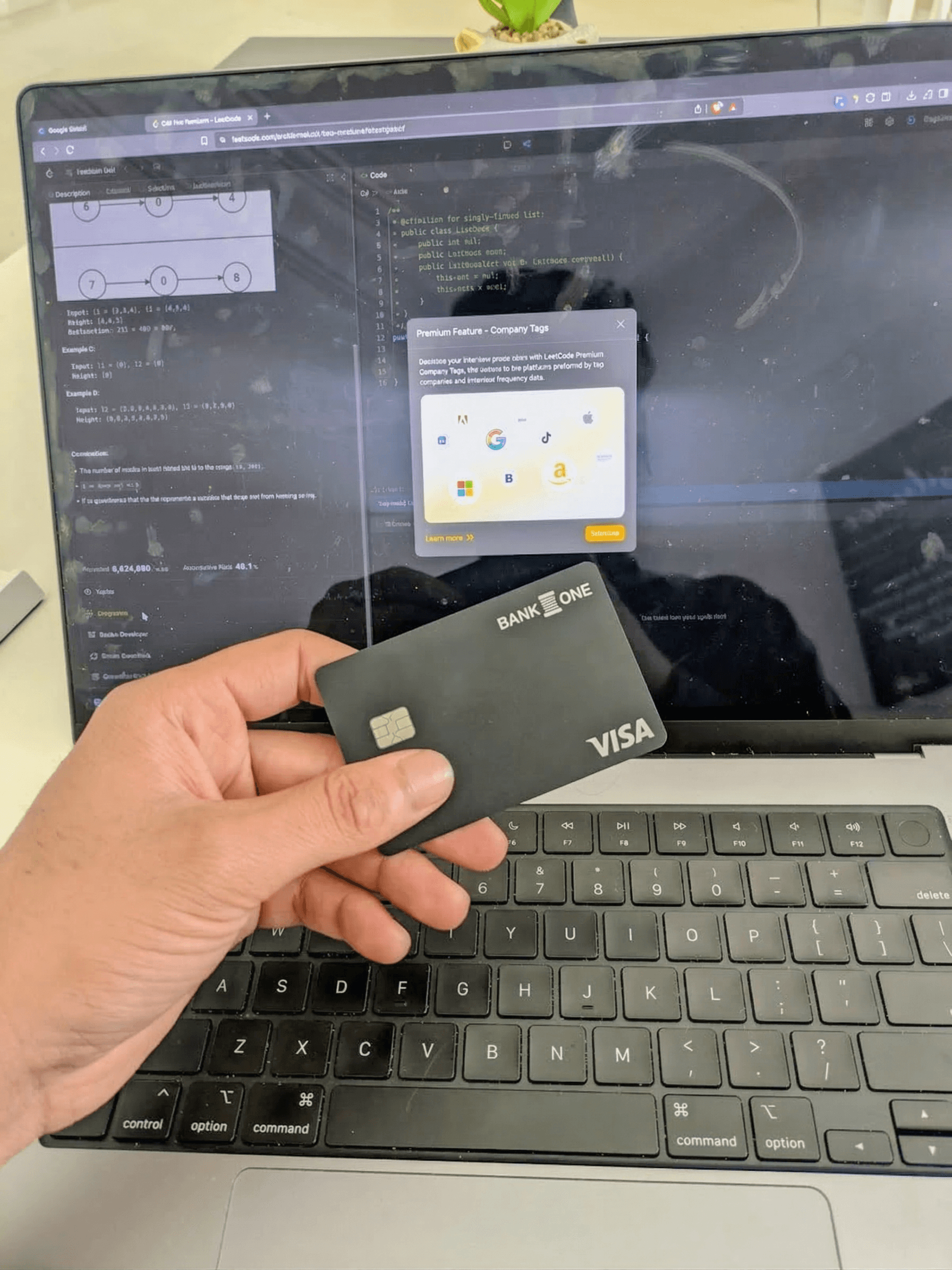
Then I get smart, or so I thought. I decide to see what the company actually asks. I click on the “Company” tab. And there it is. The lock icon. Another paywall. These people want thirty-five bucks a month just to show me what problems a company is literally asking right now. It felt off. It felt like a scam. They were holding candidate success hostage.
You know what, let’s try this. I snapped, opened a new terminal window, fired up Python, and spent the rest of the afternoon in that VS Code window.
I spent the next few days, while I was supposed to be working, scraping raw interview reports. I parsed through over 1,500 recent technical screens across nearly 500 companies. I wrote scripts to categorize the topics, analyze the difficulty levels, and calculate actual statistical frequencies.
When the raw JSON data finally started resolving into aggregate statistics, it hit me that clearly, the entire “grind LeetCode” advice is statistically stupid. The interview process is a black box, but the black box has patterns.
Here are some facts that were rather surprising:
Revelations in the data
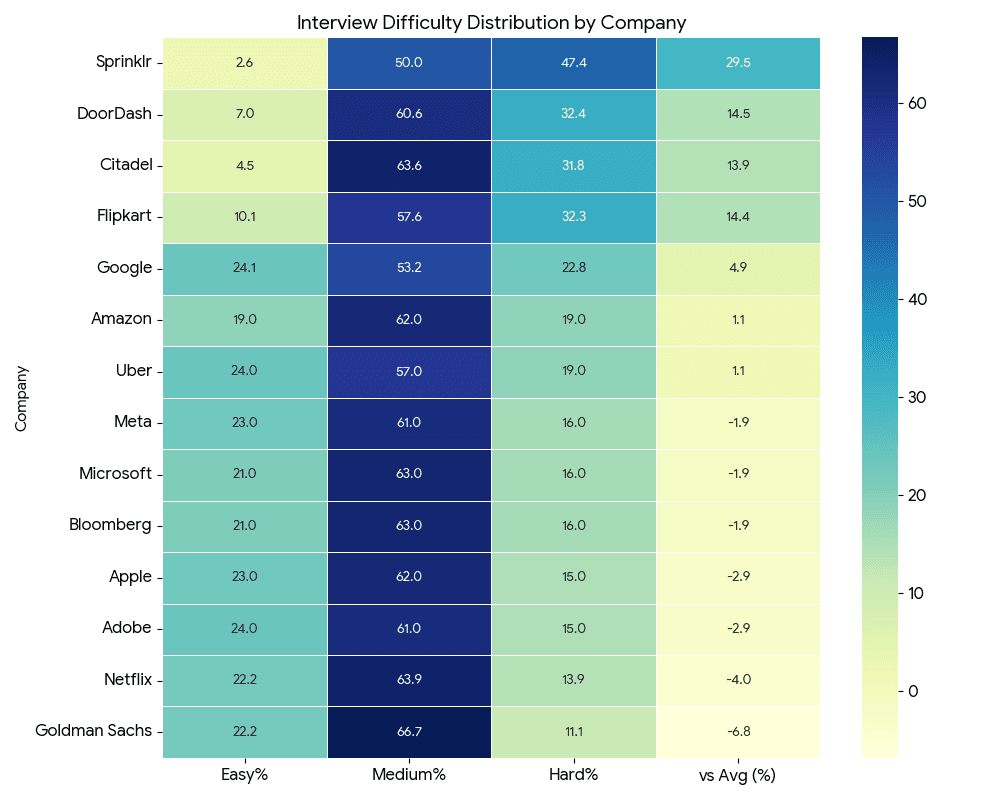
I thought FAANG is a synonym for impossible, but the data on Apple tells a different story. The problems parsed from their loops conclude only 15% of them were rated Hard. A massive 62% were purely Medium difficulty. That’s pretty much solid fundamentals they’re asking for.
But there’s a quirk. An algorithm quirk. Apple has an obsession. They test Binary Search Trees at 4.5 times the global average. That is the highest multiplier in my entire dataset for any major tech company. If you are grinding complex Hard DP problems for Apple, you are preparing for the wrong fight, brother. The data says you’re most likely to pass if you master tree traversals, not sliding windows.
Netflix is just as weird. They have a 10.7x multiplier on bucket sort. Let that sink in. A full 8.3% of Netflix problems use bucket sort compared to 0.8% globally. If you have not mastered that one specific algorithm, you need to.
Graph isn’t your optimal study option if you’re preparing for Yelp. The numbers show 92.9% of their interview problems revolve entirely around math, string manipulation, and raw logic. They basically do not ask traditional data structure questions. Accenture is the same — 65% math and logic. If you are grinding Dijkstra for them, you have wasted your life.
The data finally showed me the real boss. It is not Google. It is Sprinklr. Their interview is an absolute bloodbath. Nearly half of their entire question bank (47.4%) is rated Hard. They test unconventional logic puzzles and basically do not ask Easy questions. They are the actual endgame.
Stop being the sucker
I realized the real scam isn’t the technical interview itself; it is the paywall platforms that profit from our anxiety. They want us to stay in the dark and grind blindly so we keep paying them thirty-five bucks a month.
I did not build this scraper just for me. I took the statistical data, the specific topic multipliers, and the frequency-sorted question lists for all 458 companies, and I built a searchable frontend for it.
I put the whole thing online for free. There is no login wall and no premium tier. Searchable at crackr.dev/companies.
Stop studying blindly. Know the statistical bias of your interviewer before you take the call.